Bridging RNG Algorithms and Card Probabilities: How UK Mobile Bonuses Guide Play Across Dealer Tables and Progressive Reels
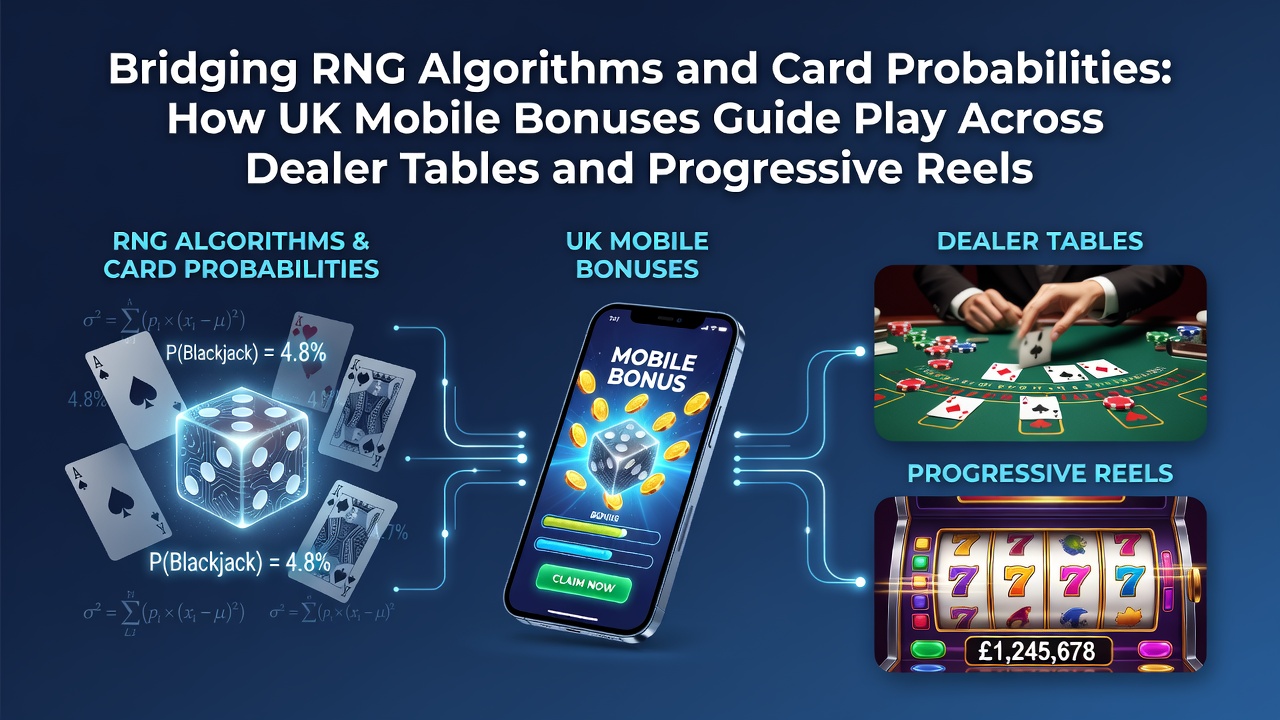
Random number generators form the backbone of digital slot outcomes while traditional card decks follow strict combinatorial rules, and UK mobile platforms use bonus structures to connect these two systems for players who move between live dealer tables and progressive reel games. Data from industry reports show that bonus mechanics often reward sequential play, where time spent on blackjack tables unlocks free spins or multipliers that transfer to slot sessions, creating measurable shifts in session length and wager distribution.
How RNG Algorithms Shape Progressive Reel Outcomes
Modern slot systems rely on pseudorandom number generators that cycle through millions of values per second, and certification laboratories test these sequences against statistical benchmarks for uniformity and independence. Researchers at academic institutions have documented that certified RNG implementations produce results consistent with theoretical return-to-player percentages across thousands of simulated spins, yet the distribution remains unpredictable on any single round. Progressive jackpots accumulate from a portion of each bet, and the trigger mechanism usually ties to a specific RNG output that aligns with jackpot symbols on the reels. Observers note that bonus offers on mobile apps frequently highlight these progressive elements, directing player attention toward titles where accumulated pools have reached notable thresholds in recent reporting periods.
Card Probabilities and Dealer Table Mechanics
Standard blackjack uses a 52-card deck or multi-deck shoe, and basic probability calculations yield house edges between 0.5 and 2 percent depending on rules and player decisions. Analysts track hit frequencies for key hands such as blackjack at approximately 4.8 percent in single-deck play, while pair-splitting opportunities appear at rates determined by card composition. Mobile apps integrate these tables with real-time data feeds, and bonus credits earned from table play often convert into slot-specific incentives, encouraging users to allocate portions of their bankroll across both formats within the same session. Studies published in peer-reviewed gambling research journals indicate that players who receive cross-format bonuses demonstrate higher engagement metrics than those restricted to single-game types.
Mobile Bonuses as Connectors Between Formats
UK operators structure welcome packages and ongoing promotions so that deposit matches or cashback apply across both table and reel products, and loyalty tiers grant additional spins after a set number of blackjack hands. These incentives function as behavioral bridges, and usage statistics from platform analytics reveal that bonus redemption rates climb when the offer explicitly references movement between dealer tables and progressive titles. In October 2026, several major providers introduced time-limited events that paired live blackjack leaderboards with slot leaderboard entries, allowing top performers to receive hybrid rewards that included both table credits and reel multipliers. Such campaigns rely on transparent terms that specify wagering requirements applying uniformly, which helps maintain compliance across different regulatory frameworks outside the UK.

Payment integrations on smartphones further streamline the transition, because instant deposit options and unified wallets reduce friction when switching from cards to reels mid-session. Industry associations in regions such as Australia have published guidelines on responsible bonus design that emphasize clear disclosure of how RNG-driven features interact with probability-based table games, and these recommendations have influenced global platform updates.
Observed Patterns in Cross-Game Play
Telemetry from multiple operators shows that sessions beginning at blackjack tables frequently extend into slot play when a bonus threshold is met, and the reverse pattern occurs when progressive reel wins generate table-game credits. Experts tracking these flows note that the average number of format switches per user increases during promotional windows, particularly when the bonus structure includes both free spins and table cashback within one package. Academic analyses of similar systems in Canadian markets have found correlations between bonus complexity and session duration, although results vary by demographic group and device type. Those monitoring October 2026 data releases expect continued refinement of these mechanics as mobile operating systems introduce stricter background processing limits that affect real-time RNG verification and bonus tracking.
Technical Integration and Verification Standards
Testing agencies evaluate RNG implementations through millions of output samples, and they apply chi-square and serial correlation tests to confirm randomness before certifying games for public use. Card-shuffling algorithms in virtual blackjack follow comparable verification protocols, ensuring that simulated decks match physical probability distributions. Mobile bonus engines sit between these systems, logging every transfer of value and enforcing rules that prevent exploitation across game categories. Links to detailed certification reports from bodies such as independent Australian research centers and university-based gambling studies provide additional technical context for readers seeking primary documentation.
Conclusion
The interplay between certified RNG outputs, combinatorial card probabilities, and mobile bonus frameworks creates structured pathways that guide player activity across dealer tables and progressive reels. Platform data and external research continue to document how these elements combine, and ongoing regulatory updates in multiple jurisdictions shape the precise mechanics available to users in late 2026 and beyond.