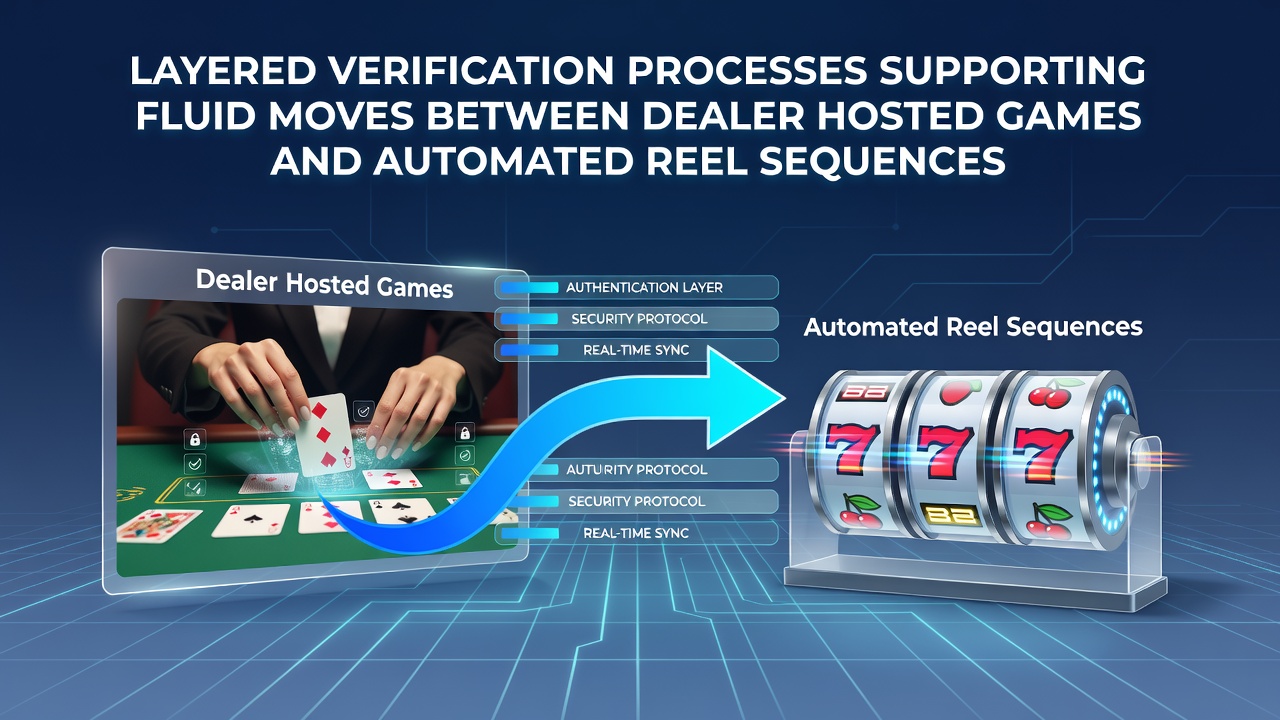
Layered Verification Systems Enabling Seamless Switches Between Live Dealer and Automated Reel Gaming
Operators deploy multi-tiered verification frameworks to manage player movement between dealer-hosted sessions and reel-based sequences without interruption, and these systems combine identity checks, transaction monitoring, plus session continuity protocols. Data from regulatory bodies across regions shows that such layers reduce login friction while maintaining compliance standards, and platforms integrate biometric elements with account linkage tools to support the flow.
Core Components of Multi-Tiered Authentication
Verification begins with initial registration that captures personal details alongside device signatures, after which secondary layers activate during active play to confirm ongoing eligibility. Researchers at institutions like the International Gaming Institute have documented how these steps incorporate real-time risk scoring that adjusts based on activity patterns across formats. Players encounter prompts for additional confirmation only when crossing certain thresholds, such as large balance transfers or extended session durations, and this approach keeps transitions fluid.
Third-party services often supply the backbone for cross-platform linkage, allowing data from one game type to inform verification in another without full re-entry. Observers note that integration with payment processors adds another verification tier focused on transaction history, and this supports uninterrupted movement from table-based interactions to spinning mechanisms. In September 2026, updates from various oversight agencies indicated expanded adoption of these combined systems in licensed environments worldwide.
Technical Integration Across Game Formats
Backend architectures use API connections to synchronize player states, so status verified during a dealer session carries forward when shifting to automated sequences. This synchronization relies on encrypted tokens that expire after set periods, and it requires consistent monitoring to flag anomalies. Industry reports highlight cases where operators tested hybrid environments, and findings revealed that layered checks prevented unauthorized access while permitting quick switches.

Hardware elements like secure tokens or app-based authenticators supplement software layers in many setups, and these additions prove especially useful during peak traffic when multiple format changes occur rapidly. Experts have observed that cloud-based verification services scale effectively to handle volume spikes, whereas on-premise solutions offer tighter control in certain jurisdictions. The combination allows platforms to adapt verification depth according to game type demands without creating bottlenecks.
Regulatory Alignment and Data Practices
Authorities in regions such as Ontario require operators to maintain audit trails for every verification event across game categories, and similar expectations appear in other markets served by bodies like the Alcohol and Gaming Commission of Ontario. These requirements emphasize transparency in how data moves between live and automated environments, and they drive adoption of standardized reporting formats. Academic studies from university programs focused on gaming technology have examined the effectiveness of such protocols, and results point to measurable improvements in session continuity metrics.
Operators track verification success rates separately for each transition type, and aggregated figures reveal patterns that inform system refinements. One case involved a platform that adjusted its risk thresholds after analyzing cross-format activity, and this led to fewer interruptions during switches. Data handling practices prioritize encryption at every stage, while retention policies align with regional statutes to protect participant information.
Operational Outcomes in Hybrid Settings
Facilities that implemented these verification layers reported smoother player retention across dealer-hosted and reel-based offerings, because reduced re-authentication steps encourage continued engagement. Monitoring tools provide real-time visibility into transition success, and staff use the insights to address isolated friction points quickly. What's interesting is how these systems evolve alongside broader platform updates, incorporating feedback loops that refine layer interactions over time.
Training programs for operational teams cover the nuances of managing hybrid verification flows, and they stress the importance of consistent application regardless of game format. External audits conducted by independent firms verify that processes meet stated criteria, and findings contribute to ongoing industry benchmarks. Those who study these implementations note that geographic variations in rules necessitate flexible architectures capable of regional customization.
Conclusion
Layered verification continues to underpin reliable movement between dealer-hosted games and automated reel sequences, supported by technical, regulatory, and operational elements that function together. Evidence from multiple sources demonstrates consistent application across licensed operations, and ongoing developments in September 2026 further illustrate adaptation to emerging platform needs. The structure ensures compliance remains intact while supporting the practical requirements of varied gaming experiences.